
I asked my friendly AI expert to solve the problem of the Teachers Unions and how they have been indoctrinating US students in our radicalized K-12 schools. Here’s the first pass with my two cents added and more to follow. Comments welcome.
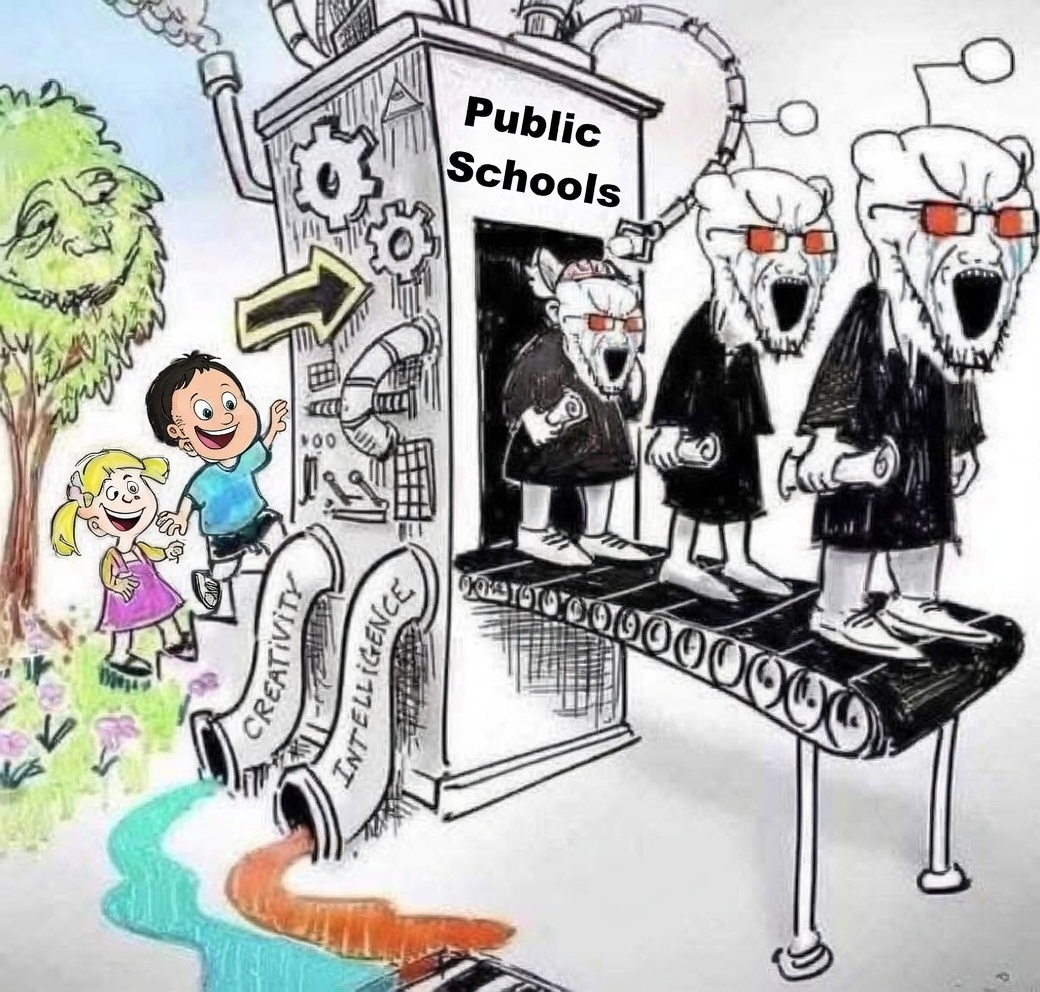

Part 1: The Origins and Evolution of U.S. Teachers Unions
Teachers unions in the United States have a long history, beginning as professional associations focused on improving education standards and teacher welfare, and evolving into powerful labor organizations advocating for workers’ rights. The two largest national unions—the National Education Association (NEA) and the American Federation of Teachers (AFT)—play central roles in K-12 education today, representing millions of educators across the country. The NEA traces its roots to 1857, when it was founded in Philadelphia as the National Teachers Association (NTA) by a group of educators aiming to “elevate the character and advance the interest of the profession of teaching, and to promote the cause of popular education in the United States.” electionbuddy.com
Initially, it functioned more as a professional network, uniting teachers, administrators, and superintendents to standardize teaching practices and advocate for better school conditions. In 1870, the NTA merged with other groups and became the NEA, expanding its scope to include advocacy for equal educational opportunities. nea.org For much of its early history, the NEA was dominated by administrators and focused on professional development rather than labor issues. It wasn’t until the mid-20th century, amid broader labor movements, that it shifted toward union-like activities, including collective bargaining and strikes, especially after merging with the American Teachers Association in 1966 to integrate Black educators. en.wikipedia.org
The AFT, founded in 1916 in Chicago, emerged from a different context. It was established by teachers seeking affiliation with the American Federation of Labor (AFL), emphasizing labor rights from the start. aft.org Early AFT locals fought against “yellow dog” contracts that forced teachers to pledge against union membership and advocated for tenure and better pay amid post-World War I pressures on educators. aft.org Unlike the NEA, the AFT was more urban-focused and politically active, supporting desegregation and collective bargaining rights in the 1950s and 1960s. bellwether.org Local unions often predated or paralleled these national bodies. For instance, in cities like New York and Chicago, teacher groups formed in the early 20th century to address low wages, poor working conditions, and lack of job security. The 1960s marked a turning point with the rise of collective bargaining laws in states like Wisconsin and New York, enabling unions to negotiate contracts formally. bellwether.org
This era saw rapid growth, with unions securing improvements in salaries, benefits, and classroom resources, but also facing criticism for strikes that disrupted schooling. Over time, both the NEA and AFT have grown into influential entities, with the NEA now the largest at over 3 million members and the AFT at about 1.7 million. influencewatch.org They advocate for public education funding, teacher training, and student equity, but their evolution reflects broader shifts in labor and politics, leading to debates about their role in modern K-12 systems.
Part 2: Political Influence, Curriculum Debates, and Social Activism
U.S. teachers unions have become significant political players, particularly in Democratic circles, while facing accusations of influencing school curricula in ways that some critics label as indoctrination. However, their Democrat supported research suggests these claims are often overstated, with unions focusing more on labor issues than direct control over classroom content. The reality is that teachers unions are now completely far left. This has clearly been demonstrated by the teachers all across the country taking every student from 2nd grade and higher – on regular strikes to protest the ICE arrests – particularly in the very contentious Minneapolis – where it is used to divert attention from the multi-billion dollar Somali scandal – where daycares and other fraudulent schemes bilked billions of dollars from Federal, State and Local governments. To add insult to injury this is a sign that demonstrates just how corrupt the Mayor and Governor and Minnesota bureaucrats are:

The Minnesota LEARING center
Throughout the country students can be seen not just peacefully protesting but throwing objects at cars and actually participating in violence.
Politically, unions like the NEA and AFT donate overwhelmingly to Democrats—over 90% of contributions since 1990—supporting candidates who align with their priorities on education funding and workers’ rights. opensecrets.org They have lobbied for policies like increased school budgets, student loan forgiveness, and opposition to voucher programs. influencewatch.org These policies like anti-vouchers, anti-home schooling or student loan forgiveness all demonstrate their far left autocratic political world view. These teachers unions do not want competition. And this lack of competition is directly responsible for the mediocrity of our schools where the priority has shifted to bloated high paying administration and much lower paid indoctrinated teachers who either go with the far left political views or are systematically “culled” from the herd.
Critics argue this alignment reflects a left-leaning bias, with union leaders like AFT President Randi Weingarten tied to progressive networks. influencewatch.org Surveys show teachers themselves lean moderate to liberal, with about 58% identifying as Democrats, though not uniformly extreme. But if a teacher is Republican or Conservative he/she/they better make sure to keep that to themselves if they want to keep their jobs. magnoliatribune.com Claims of indoctrination often center on topics like critical race theory (CRT), gender identity, and equity initiatives. Some conservatives argue unions promote “radical” ideologies through professional development and policy advocacy, potentially leading to biased teaching. nea.org For example, the NEA has supported anti-racism training and LGBTQ+ inclusion, which opponents see as divisive. ebsco.com But the focus on race and gender has led to the absurd use of pronouns that no sane person can comprehend, contradictory positions that on one hand promote women’s rights while at the same time pushing for biological males to compete in women’s sports: and this focus on gender transition promotes radical LGBTQ+ teachers to promote extreme positions including chemical castration and irreversible surgeries for teens and younger – and in many school districts all without parental consent.
However, studies, including a 2025 Annenberg Institute survey of high school students, find no “epidemic of widespread indoctrination,” with divisive topics appearing sporadically and often student-initiated. edworkingpapers.com But that study is absurd on its face. Annenberg Institute has morphed into a far left organization that has changed with the Democrat party from middle left to very far left. Obviously this study is completely biased and all the pictures of violence and walk outs instituted by the Teachers Unions say otherwise. These kids have been indoctrinated. They are radicalized. Even to the point of violence. Who are you going to believe – a biased Annenberg study – or your lying eyes watching the countless videos of children protesting on X and other free speech outlets? A 2024 American Historical Association study similarly concluded that history curricula are not systematically biased. edweek.org Links to “radicalized youth” attempt to down play the indoctrination but the pictures and videos on X and other free speech advocates and news reports tell a different story.
Recent events, such as 2026 protests in Minnesota against ICE operations, involved educators and students decrying federal actions near schools, including the shootings of civilians like Renee Good and Alex Pretti. theconversation.com Although the shootings of these radical protesters is tragic – the evidence is clear that in both cases – the ICE agents acted in self defense. The first was being run over by a 4000 lb SUV. The other an armed protester appeared to brandish a firearm and, and there were previous videos showing this violent protester kicking out a tail light of an ICE vehicle and physically confronting ICE agents. The reality is that these protests were violent and provocative. It is clear to anyone that follows the money from billionaire Insurrectionists like Soros, Styer and others that the game plan from the organizers of these riotous protests is to recreate the same nationwide protests they got after the George Floyd death. In their minds, these protests were a significant reason the democrats captured the 2020 election, and their goal is to do the same in 2028. This kind of violent protest are all too reminiscent of Bolsheviks and Maoists and their playbook to capture political power through violence and intimidation. These were not peaceful protests. They have been planned and funded by radical Insurrectionists as explained in detail in my articles on Sanctuary Cities.
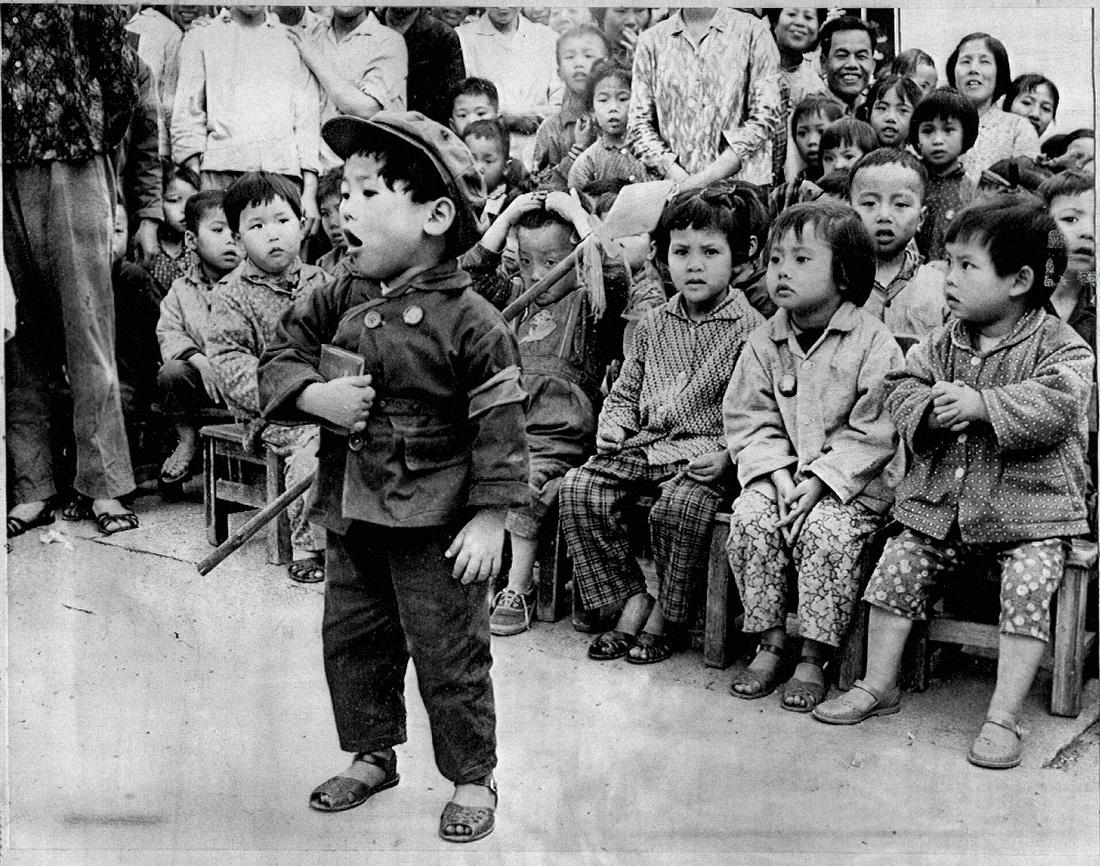
Maoist Children Swearing allegiance to the Little Red Book

This is the logical conclusion of a Maoist Revolution when you don’t comply
Unions like the NEA and AFT mobilized support for affected communities, framing it as protecting student safety amid immigration enforcement. ei-ie.org DHS reported increased assaults on ICE agents, attributing some to “radical rhetoric,” but evidence directly tying this to union-led indoctrination is limited. dhs.gov Protests against the Trump administration, including anti-ICE actions, often stem from broader social movements like Black Lives Matter, with some teacher and student participation, but not proven as a direct result of union curricula influence. Again, this conclusion is absurd on its face. The countless videos of teacher led protests and violence posted on X totally contradicts that conclusion. Teachers unions indoctrination is at the root of all of this radicalization. Here’s another peaceful protest throwing rocks at cars in LA:

Of course, many of these studies and conclusions are their own critique of themselves. But the reality of this lie is right there on the nightly news, X, and any reputable reporting of the news. All you have to do is to go into any school in California or other heavily backed union school in America – and you will see BLM posters prominently displayed with people of color that the left has labeled as “oppressed” to contrast with white “oppressors” – but you will have to look long and hard to find posters of our founders in a positive light. Overall, while unions advocate for progressive policies, classroom content they tell you is shaped more by state standards, local boards, and individual teachers than by national union directives – the reality is that K-12 schools in America, teachers unions have radicalized the teachers who either support their far left policies or are threatened by poor evaluations, intimidated into silence and they must go along with these extreme views or suffer the consequences being shoved aside for promotions or even threats of dismissal. Many examples are out there but one that stands out is a California teacher who won a $360k judgement against the school district when she refused to abide by their transgender policies (https://www.nbcnews.com/nbc-out/out-news/california-district-pay-360k-teacher-fired-not-transgender-policies-rcna152772):
Advocates for Faith & Freedom, a nonprofit law firm focused on “protecting constitutional and religious liberty in the courts,” filed the lawsuit on Tapia’s behalf in May 2023. The firm alleged Tapia (the teacher) was fired for refusing to abide by their absurd transgender pronoun mandate was wrongfully terminated for her religious beliefs.
“People of faith should be allowed to maintain their personal beliefs without fear of losing their job,” Mariah Gondeiro, vice president and legal counsel for the group, said in a statement last year. “Jessica Tapia was not dismissed for any wrongdoing, rather, she was dismissed for her Christian beliefs. This is a clear violation of our Constitutional rights.”
Part 3: Proposals for Reform and Alternatives to Address Concerns
Debates over teachers unions have prompted various reform proposals aimed at reducing their influence, enhancing accountability, or shifting focus toward education outcomes. These ideas span from legislative changes to structural alternatives, emphasizing parental involvement and market-based options without necessarily eliminating unions entirely. One common suggestion is limiting collective bargaining to core issues like pay and benefits, excluding curriculum or hiring policies, as done in states like Wisconsin and Iowa. aei.org This aims to prevent unions from blocking reforms such as merit pay or easier dismissal of underperforming teachers. Another approach is revoking or amending the NEA’s federal charter—granted in 1906—to prohibit political lobbying, require annual congressional reports, and ensure respect for teachers’ First Amendment rights to opt out of membership. freedomfoundation.com
Bills like the STUDENT Act seek to align the NEA with other chartered organizations by curbing electoral activities. americanexperiment.org To prevent perceived indoctrination, advocates propose strengthening parental rights through transparency laws, like requiring schools to post curricula online or allowing opt-outs from certain topics. nea.org Expanding school choice—via vouchers, charters, or tax credits—could empower parents to select schools aligning with their values, potentially reducing union dominance in traditional public systems. hoover.org Eliminating “exclusive representation” in bargaining, where unions speak for all teachers regardless of membership, is another idea to foster competition or individual negotiations. nrtw.org Critics of unions argue these reforms could lead to better student performance by enabling innovations like performance-based pay. aei.org Supporters counter that unions protect against exploitation and advocate for equitable funding. Balanced approaches might include subjecting unions to greater financial transparency under laws like the Labor-Management Reporting and Disclosure Act. idahoednews.org
While respecting educators’ rights to organize is something we need to accept – we do not have to accept the violence caused by the indoctrination of these teachers unions. They need to be cleansed of the radicals that have resulted in our schools spending more time on far left political indoctrination than improving our failed public education system.
Resources that detail our Failed Public School System:
- The Knowledge Gap: The Hidden Cause of America’s Broken Education System—and How to Fix It by Natalie Wexler (2019) Argues that elementary schools overemphasize generic “reading comprehension skills” while neglecting building broad background knowledge, leading to stagnant comprehension scores (especially harming disadvantaged students).
- Between the State and the Schoolhouse: Understanding the Failure of Common Core by Tom Loveless (2021) Examines why Common Core standards (a major national reform) failed to boost achievement, attributing it to flaws in top-down standards-based reform theory and implementation challenges.
- Failure: The Federal Miseducation of America’s Children by Vicki E. Alger (2016)
Critiques the US Department of Education’s role since 1979, arguing federal overreach and meddling have worsened outcomes rather than improved them. - Inside American Education: The Decline, the Deception, the Dogmas by Thomas Sowell (1993)
A classic conservative critique focusing on ideological biases, lowered standards, and systemic deceptions in public schools. - Dumbing Us Down: The Hidden Curriculum of Compulsory Schooling by John Taylor Gatto (1992/2005) Influential radical critique claiming schools prioritize conformity and obedience over genuine learning (often cited in homeschooling/unschooling circles).
Other notable older critiques include Public Education: An Autopsy by Myron Lieberman and The Schools We Need: And Why We Don’t Have Them by E.D. Hirsch Jr.
Influential Reports and Studies:
- A Nation at Risk (1983 National Commission on Excellence in Education)
Iconic Reagan-era report declaring a “rising tide of mediocrity” in schools, citing declining test scores and poor preparation. It shaped decades of reform debates, though later analyses (e.g., Sandia Report in the 1990s) questioned some claims. - NAEP (Nation’s Report Card) Long-Term Trend and Main Assessments (ongoing from National Center for Education Statistics)
Federal data showing declines: e.g., reading/math scores for 13-year-olds dropped significantly from 2012–2023 (pre- and post-pandemic), with 2024/2025 releases confirming continued low proficiency (e.g., 28% of 8th graders proficient in math). Reasons cited include pandemic disruptions, but trends began earlier (2013 stagnation/decline). - Brookings Institution analyses (e.g., Tom Loveless on Common Core failure)
Highlight why large-scale reforms often fail due to layers between policy and classroom.
Broader Explanations from Analyses Common themes across sources:
- Curriculum narrowing and avoidance of knowledge-building (Wexler).
- Faulty reform theories like standards-based accountability (Loveless).
- Federal overreach vs. local control issues (Alger).
- External factors (poverty, family instability) plus internal ones (teacher prep, incentives, tech distractions like smartphones/social media).
- Unequal funding/resources and achievement gaps persisting despite efforts.
For primary data, check the NAEP website (nationsreportcard.gov) for latest scores. For balanced views, contrast sources like Pew Research (public dissatisfaction surveys) with critiques questioning the “failure” narrative (e.g., some argue US schools perform adequately when adjusted for demographics). These references represent prominent viewpoints; the topic remains debated across ideological lines.